The Origin Story of Peter Pan's Lost Boys: From Prams to Neverland
The tale of Peter Pan has enchanted generations, painting a vivid picture of eternal youth, flying adventures, and a fantastical island called Neverland. But central to Peter's world, and perhaps even more poignant than the boy who wouldn't grow up, are his loyal companions: the Lost Boys. Their origin story, a blend of whimsy and melancholy first penned by J. M. Barrie, is surprisingly specific, weaving a narrative that’s both charming and a little heartbreaking. It sets the stage for every adaptation that followed, defining the very essence of what it means to be a child adrift, found, and led by the eternal boy.
At its heart, the origin story of Peter Pan's Lost Boys isn't just about adventure; it's about the universal fear of being forgotten, the longing for belonging, and the strange magic that binds a makeshift family.
At a Glance: The Lost Boys’ Beginnings
- How they became lost: Boys who tumbled out of their prams when their nannies weren't looking.
- The seven-day rule: If unclaimed within a week, they were "sent far away to Neverland."
- No girls, originally: Barrie stated girls were "too clever" to get lost this way, a detail retconned in later adaptations.
- Peter Pan's role: He became their captain and surrogate father figure in Neverland.
- Their true names: Though often referred to by nicknames, Barrie gave the original boys distinct personalities and even future lives.
- A flexible concept: While Barrie's origin is canonical, later authors and filmmakers have offered alternate backstories, expanding the Lost Boys' lore.
The Original Vision: Barrie's Tender Yet Tragic Premise
J. M. Barrie, the genius behind Peter Pan, didn't leave the origins of the Lost Boys to vague implication. He gave them a concrete, if fantastical, backstory rooted in a very real, common anxiety: a child becoming separated from their caregivers. In his 1904 play, Peter Pan, or The Boy Who Wouldn't Grow Up, and subsequent novelizations, Barrie explains that the Lost Boys are quite literally boys "who fall out of their prams when the nurse is looking the other way."
It's a fleeting moment of parental inattention, magnified into a permanent separation. But the story deepens: if these unfortunate lads aren't "claimed in seven days," they are "sent far away to Neverland." Imagine the sheer weight of that: a week-long window for reunion, and then, off to an eternal childhood, led by Peter Pan, their captain. It's a tale tinged with the sadness of abandonment, softened by the allure of a magical refuge.
Crucially, in Barrie's original telling, there were no "lost girls." Peter himself explains this absence, remarking that "girls are too clever to fall out of their prams." This detail reflects the societal views of the early 20th century, though modern interpretations, like Disney's 2023 film Peter Pan & Wendy, have wisely retconned this to include girls, making Neverland's foundlings a more diverse crew.
These boys, having lost their way in the real world, found a new kind of belonging under Peter Pan's leadership. They became a tribe, a family forged not by blood, but by shared circumstances and a collective yearning for adventure. For many, the dynamic between Peter Pan and the Lost Boys forms the very heart of the Neverland saga, exploring themes of leadership, loyalty, and the bittersweet nature of eternal childhood.
Meet the First Lost Boys: Personalities and Fates
Barrie gave his original Lost Boys distinct names and personalities, each contributing to the chaotic yet endearing dynamic of Peter's gang. While often overshadowed by Peter himself, these boys are more than mere background characters; they have their own quirks, dreams, and surprisingly complex fates, especially when Barrie revisited their stories.
Tootles: The Humble Heart
Tootles is perhaps the most unfortunate and humblest of the Lost Boys. His deep-seated regret and occasional clumsiness define him. Famously, he’s tricked by Tinker Bell into accidentally shooting Wendy with an arrow, a pivotal moment that highlights his innocence and the tragic consequences of his naivete. Despite this, he’s fiercely loyal.
- Original Fate: Tootles eventually returns to London with the Darling children, grows up, and becomes a judge.
- Later Adventures (Peter Pan in Scarlet): In this sequel by Geraldine McCaughrean, Tootles undergoes a profound transformation, becoming a girl and finding his biological father.
- A "Marble" of His Own (Hook): Steven Spielberg's 1991 film features an elderly Tootles in London, a silent, eccentric man who literally loses his "marbles" – his happy thoughts. He eventually returns to Neverland, using fairy dust, regaining his youth and joy. In Disney films, he remains largely silent.
Nibs: The Spirited & Brave
Nibs is characterized by his happy and debonair nature, often suggested to be the bravest of the Lost Boys. He possesses a faint memory of his pre-Neverland life, specifically recalling his mother wanting a "cheque book." This small detail offers a poignant glimpse into the family life he left behind, anchoring him to a forgotten past.
- Original Fate: Nibs also returns to London and grows up, settling into a life working in an office.
- Choosing a New Path (Peter Pan in Scarlet): Uniquely, Nibs is the only Lost Boy in Peter Pan in Scarlet who chooses not to return to Neverland. He remains in London, cherishing his children and, ironically, never meeting his real parents, choosing his present family over a past he barely remembers.
Slightly: The Conceited Musician
Slightly is the most conceited of the group, convinced he remembers his past life based on fragmented misunderstandings—like interpreting a "Slightly Soiled" tag on his clothes as a sign of his former noble status. Despite his pretensions, he has a genuine talent for music, often crafting whistles and flutes.
- Original Fate: Slightly grows up to marry into nobility, fulfilling his misplaced grand notions, and becomes a lord.
- The Melancholy Clarinetist (Peter Pan in Scarlet): In the sequel, Slightly is a widower with no children when he returns to Neverland. He finds his real mother and, upon his return to London, retains his youthful age of eighteen, a bittersweet echo of his Neverland days.
Curly: The Pickle with Good Hair
Curly is affectionately described as "a pickle," a boy prone to getting into scrapes and trouble, with, as his name suggests, curly hair. His mischievous nature often lands him in amusing predicaments.
- Original Fate: Like Nibs and The Twins, Curly finds a conventional adult life, working in an office in London.
- A Noble Sacrifice (Peter Pan in Scarlet): McCaughrean's sequel sees Curly become a doctor. He owns one of Nana's great-great-grandchildren and, in a moment of selflessness, gives up his renewed youth to save Peter, demonstrating the deep bond between them.
The Twins (First and Second): The Enigma
Barrie treated the Twins as a single entity, often stating that Peter Pan didn't quite understand the concept of twins, hence their lack of distinct individual personalities. They are often seen acting in unison, reinforcing their shared identity.
- Original Fate: The Twins, like Nibs and Curly, also grow up to work in an office after returning to London.
- Marmaduke & Binky (Peter Pan in Scarlet): It's in Peter Pan in Scarlet that the Twins are finally given individual names: Marmaduke and Binky. They manage to find their biological mother and bring her back to London, completing their journey of belonging.
Lost Girls? The Evolution of Neverland's Youth
As noted, Barrie's original narrative explicitly excluded lost girls, positing them as "too clever" to suffer the same fate as their male counterparts. This particular detail, a product of its time, has undergone significant reinterpretation in modern adaptations.
The most prominent example of this retcon comes from Disney's 2023 film, Peter Pan & Wendy. Here, the Lost Boys are reimagined as a diverse group, including girls such as Chinese-American Birdie and Latino Bellwether. This update reflects contemporary values of inclusivity and ensures that the fantasy of Neverland is accessible to all children, regardless of gender. These new Lost Girls, along with their male counterparts, eventually choose to return to England with the Darling children, highlighting a desire for family that transcends Neverland's eternal youth.
Neverland's Shifting Shores: Adaptations Across Media
The enduring popularity of Peter Pan has led to countless adaptations, each offering a unique take on the Lost Boys' origin, personalities, and roles within Neverland. These interpretations showcase the versatility of Barrie's initial concept, allowing storytellers to explore different facets of childhood, freedom, and belonging.
Literary Journeys Beyond Barrie
Even within literature, other authors have expanded upon Barrie's universe, offering alternate backstories for the Lost Boys:
- The Peter and the Starcatchers Series: This popular prequel series by Dave Barry and Ridley Pearson introduces an earlier group of Lost Boys whose origins significantly differ from Barrie's canon. They include boys Peter knew from St. Norbert's orphanage (Prentiss, James, Tubby Ted, Thomas). Here, James serves as Peter's second-in-command. This series explores a grittier, more adventurous journey to Neverland, where these early Lost Boys eventually choose to grow up and return to London, paving the way for a new generation of Lost Boys with Barrie's original names to join Peter.
- Peter Pan in Scarlet (2006): As mentioned, this authorized sequel by Geraldine McCaughrean provides a fascinating continuation of the original Lost Boys' stories. As adults, they are called back to Neverland and miraculously revert to childhood. Their individual journeys focus on rediscovering their pasts and confronting the choices they made about growing up, adding profound emotional depth to their characters.
Silver Screen Interpretations
Films have perhaps been the most influential in shaping public perception of the Lost Boys, from classic animation to live-action epics.
- Disney Franchise (1953, Return to Never Land, 2023):
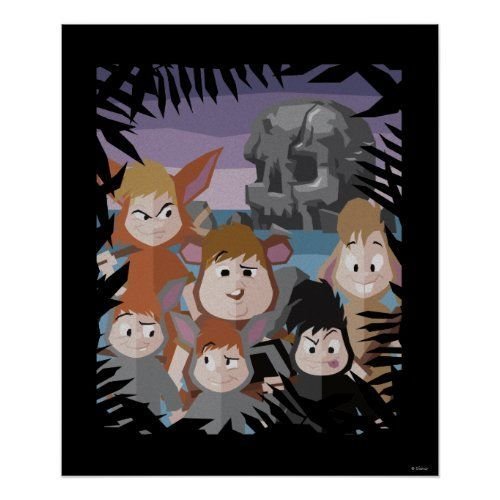
- 1953 Animated Classic: The original Disney film depicts the Lost Boys as a largely undifferentiated group, often named after animal costumes (Fox/Slightly, Rabbit/Nibs, Bear/Cubby, Skunk/Tootles, and Raccoons/Twins). Their personalities are less distinct, serving primarily as Peter's loyal followers in various escapades.
- 2023's Peter Pan & Wendy: This live-action adaptation stands out for its deliberate diversity, not only including girls in the Lost Boys' ranks but also featuring a multi-ethnic cast. As mentioned, characters like Birdie and Bellwether contribute to a more inclusive Neverland, and their eventual return to England with the Darlings underscores the film's emphasis on family and choice.
- Hook (1991): Steven Spielberg's imaginative sequel presents an army of diverse Lost Boys living in a magnificent treehouse. These boys are implied to be from different eras, gathered by Peter over time. This film introduces Rufio, a rebellious and charismatic leader chosen by Peter, whose tragic death at the hands of Captain Hook marks a turning point. Peter then appoints the kind-hearted Thud Butt as the new leader, emphasizing different qualities of leadership. The film truly broadened the concept of the Lost Boys beyond Barrie's original five.
- Peter Pan (2003): P. J. Hogan's visually stunning live-action film is notable for retaining Barrie's original Lost Boy names and largely adhering to their established personalities. It offers a particularly heartwarming ending where, with the Darlings' encouragement, all the Lost Boys are adopted by various families in London (except for Slightly, who finds a home with Aunt Millicent), providing a happy resolution to their "lost" status.
- The Lost Boys (1987): While a popular film, this 1980s vampire movie is a title reference only. Its characters, a group of young vampires who never age, evoke the thematic idea of eternal youth, but their story is entirely separate from Peter Pan's Neverland.
- Pan (2015): This prequel reimagines Peter's origin. Here, Peter is an orphan rescued from an oppressive orphanage by Hook. They encounter other boys enslaved by the pirate Blackbeard, who are later dubbed "Lost Boys" by Hook, establishing an alternative, grittier origin for the group separate from Barrie's pram story.
Small Screen and Gaming Realms
The Lost Boys have also ventured into television series and video games, each medium adding its own unique twist to their legend.
- Once Upon a Time (Seasons 2 & 3): This fantasy drama offers a darker portrayal of the Lost Boys. In this version, they are the loyal, often ruthless, inhabitants of Neverland, serving as Peter Pan's murderous enforcers. Their primary role is to protect Peter and his secrets, painting them in a far more sinister light than Barrie's playful rascals.
- Alien: Earth (2025): In a surprising crossover, a futuristic sci-fi series is slated to use the names of Wendy and the Lost Boys (Slightly, Curly, Tootles, Nibs) for human-alien hybrids. This demonstrates the deep cultural penetration of Barrie's characters, whose names can evoke themes of youth, otherness, and transformation even in vastly different genres.
- Kingdom Hearts Series: The beloved Disney-Square Enix crossover video game series, Kingdom Hearts, features appearances by the Lost Boys. Specifically, Cubby and Slightly (from the Disney animated canon) appear in Kingdom Hearts Birth by Sleep and related comics, allowing players to interact with them as part of Peter Pan's world, further solidifying their place in popular culture.
Why We Keep Getting Lost (and Found) in Neverland
The origin story of Peter Pan's Lost Boys, born from a whimsical yet poignant idea of forgotten children, continues to resonate because it taps into fundamental human experiences: the desire for eternal youth, the fear of abandonment, and the profound need for belonging. Barrie’s initial premise—boys tumbling from prams and whisked away to an island of adventure—provides a powerful metaphor for the transition from innocence to experience, or in their case, the deliberate refusal to transition.
Each adaptation, whether it adheres closely to Barrie’s vision or invents entirely new backstories, serves to enrich this tapestry. From the five distinct personalities of the original Lost Boys to the diverse, spirited crews of later films and series, their journey is a constant reminder of the magic that can be found even in being lost. They are a testament to the power of imagination, the enduring appeal of childhood, and the unwavering spirit of adventure that lives in all of us, beckoning us toward Neverland's enchanting shores.
Ultimately, the Lost Boys are more than just characters; they are an archetype, representing that part of us that wishes to forever remain young, wild, and free. Their evolving origin stories ensure that Peter Pan’s Neverland remains a vibrant, ever-changing destination for new generations of dreamers and adventurers.